
The rise of artificial intelligence during this century has set off fears among the public as to where the world is headed. There is the sense among many people that the adoption of new technology for processes of production, especially artificial intelligence, would ultimately lead to eradication in the use of human labor. Such fears seem to be growing as more innovations continue changing the employment landscape. However, people should understand that despite technology advances leading to the loss of jobs, it has also created millions of jobs. There is a mutually symbiotic relationship between humans and technology whereby technology is used to complement and make efficient human labor. By learning of ways to effectively implement the use of technology with labor, it would eradicate these fears among people.
Those individuals with concerns about artificial intelligence, automation, and robots lack the ultimate truth that technology has greater chances of changing jobs and not eliminating them. Many manufacturing companies have been adopting mechanical exoskeletons to reduce fatigue and strain, but still, they require human resources. People in the sales and marketing field are now required to be more capable of online marketing to engage and adapt to the preference of the market. Therefore, it proves to be certain that technology is changing the labor industry and not the actual loss of jobs and unemployment.
Evidently, the labor industry’s technological change has significantly reduced the demand for routine work that can be mechanized. On the other hand, it has increased the pay and demand for analytical and high-skilled technical work. Such a case may imply that tech jobs are likely to be the only occupations that guarantee employment growth. A good example is the case of the Langdon Winner’s, who argued about tomato farming and the role automation (technology) played to the detriment of the workforce constituting local Californian farmers. Local farmers and residents ended up losing their jobs where the case outlines that by late 1970s, about thirty two thousand jobs within the tomato industry had been totally removed due to direct consequence of using mechanization. However, in the real sense, they are not the only ones that prove to be growing. There has also been a growing need for data scientists and developers. Additionally, jobs in the medical industry and personal care prove to be growing even faster. Technological advances have been seen creating more and more jobs while at the same time increasing the effectiveness of many industries.
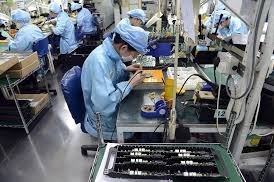
Research shows that the demand for manual labor and basic data processing skills is bound to decline, while emotional, social, and cognitive skills are bound to increase demand. Such skills like giving advice, teamwork, leadership, and solving complex human problems, prove to be a major facilitator towards human interaction and globalization—many jobs relating to service and health that technology cannot replace have been seen growing in demand significantly. Even an average American citizen of today has better access to education and information, better healthcare, and better means of communicating and traveling than the richest people who lived in the recent past before modernization and advances in the technological field. Modern people have experienced a drastic change and an increase in living standards, with labor productivity being the most important determinant.
Being that labor productivity is calculated by dividing the output by the inputs, it is definite that technology has increased labor productivity by a huge margin. A good example is given by the Council of Economic Advisers of the great improvements witnessed in agricultural productivity in the last twenty years. Back in the early eighteenth century, farmers took approximately 300 hours to produce 100 bushels of wheat. In the late eighteenth century, after the innovation of bull or horse-drawn machines, the time required to do the same work took approximately fifty hours. By the year 1975, when tractors were introduced, farmers could produce 100 bushels of wheat in approximately four hours.
The increase in productivity by agricultural machines has reduced the production costs, reducing the cost of food and an increase in the food supply. Additionally, the increase in productivity from agricultural work automation has led farm workers to join the industrial economy by migrating to urban areas, helping the industrial economy grow and develop. This has led to the creation of new services and goods and a significant increase in consumption. As productivity increased while automation reduced production costs, education, healthcare, transportation, and other such services became even more affordable.
The increase in productivity by agricultural machines has reduced the production costs, reducing the cost of food and an increase in the food supply. Additionally, the increase in productivity from agricultural work automation has led farm workers to join the industrial economy by migrating to urban areas, helping the industrial economy grow and develop. This has led to the creation of new services and goods and a significant increase in consumption. As productivity increased while automation reduced production costs, education, healthcare, transportation, and other such services became even more affordable.
The increase in productivity by agricultural machines has reduced the production costs, reducing the cost of food and an increase in the food supply. Additionally, the increase in productivity from agricultural work automation has led farm workers to join the industrial economy by migrating to urban areas, helping the industrial economy grow and develop. This has led to the creation of new services and goods and a significant increase in consumption. As productivity increased while automation reduced production costs, education, healthcare, transportation, and other such services became even more affordable.
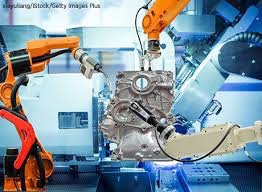
Therefore, we must understand that automation in the labor sector lacks any universal employment effect. Technology either substitutes or complements human labor. For a machine to substitute human labor, it has to be more productive than the human worker at the same cost or be as productive as the worker. Such incidents are often experienced when the human labor tasks prove to be routinely strategized and where the tasks instructions are easily translated to codes that computers can perform. Additionally, technology can easily replace laborers in controlled and simplified environments.
Many people who have lost jobs in the technological era are those that have been substituted by technology or lack technological skills. The move towards technology proves to be a better move for more yield that is produced, and the intention of adopting such technologies is not to reduce human labor but rather enhance it. However, despite technologies’ ability to perform even the most complex calculations in less than a second, a machine cannot be creative or provide care services as effectively as people do. Technology has proven to have the ability to complement labor, allowing human laborers to be more productive but cannot completely replace human labor. Implying that technology or machinery meant to complement human labor only makes it easier for human laborers to perform their tasks and concentrate on the ideal human sense that makes humans greater, such as complex communication, pattern recognition, problem-solving and idea generation, all of which are regarded as the weaknesses of computer and technology as a whole. A good example is bookkeeping software, spreadsheets, and calculators that have made accountants much easier but cannot completely replace accountants. A greater part of the labor industry still depends on human labor to make insights and provide strategic advice to most businesses and institutions to successfully adopt technological equipment and machines.
Numerous forms of automation have already been put in place in most regions of the world to complement human labor, for example, artificial intelligence allowing humans to do other valuable works and telescopes that have helped in the solar system discovery that would not have been possible without technology. Therefore, the technological relationship to human labor proves to be a mutually empowering one. Furthermore, machines have been seen to increase labor productivity and lower the costs of production, allowing us to create services and goods easily. Therefore, technology proves to have more positive impacts on the labor industry than negative impacts.
 Responsible Science and Innovation